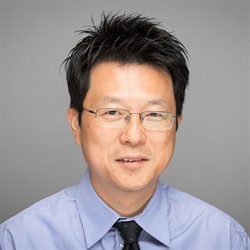
Hyundo Franz Kim, PhD, MSOM, LAc
College of Professional Studies, IL - Assistant Dean, Acupuncture & Herbal Medicine
In this video, you’ll hear why clinical experience is the hallmark of National University’s Master of Science in Acupuncture and Master of Science in Oriental Medicine degree programs. Dr. Hyundo Kim is chief clinician for acupuncture and oriental medicine at the NUHS Whole Health Center. He is dedicated to providing a clinical environment where students and interns learn correct diagnosis and effective treatment skills that provide the best patient outcomes.
About Dr. Kim
Originally from Korea, Dr. Hyundo Kim came to the United States when he was 11 years old. He earned a bachelor’s degree in history and biology from the University of Illinois at Champaign and studied oriental medicine at Emperor’s College of Traditional Oriental Medicine in California, graduating in 1998 with a Master of Science in Oriental Medicine.
Dr. Kim returned to Korea and worked at the Korean Research Institute of Geriatrics as a senior researcher on projects exploring longevity, preventive medicine for the elderly, Parkinson’s disease, and dementia.
He earned his PhD at Sangji University in Wonju City, Korea, where he also taught medical terminology as well as classes in the theory of oriental medicine. “In Korea, there are several specializations within oriental medicine,” Dr. Kim explained. “My PhD is in acupuncture and moxibustion.”
While working at the Sangji University, Dr. Kim participated in several medical service projects and seminar presentations in countries all over the world, including Turkey, Russia and Vietnam.
After finishing his PhD, Dr. Kim returned home to suburban Chicago and opened a private practice in Lisle, Ill. Dr. Kim started on the faculty of NUHS, his first U.S. teaching position, in May 2007. Because of his excellent knowledge and skills, he was promoted to the position of chief clinician for the NUHS Acupuncture and Oriental Medicine Clinic.
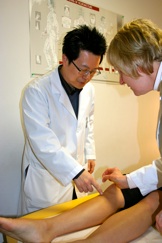 “My goal is to make sure that students have the confidence to operate as a sole practitioner when they graduate. Extensive clinical intern experience and one-to-one access to faculty clinicians is key to building that confidence,” Dr. Kim said.
“Our curriculum is much more rigorous compared to many other schools. Our university provides many advantages that other schools lack, like access to a full gross anatomy laboratory and a fully stocked on-site herbal dispensary,” Dr. Kim said.
“Our students are much better prepared for the real world. I believe in the idea of integrative medicine and including an emphasis on western science. Since acupuncture is not normally the patient’s first choice for care, they come to us later and bring in lots of western tests and exams. Even if you are not going to treat based on western protocols, you have to be familiar with what they are.”
“I think very highly of our students. They are very talented and very well-educated. Even though our program is fairly new, we are producing some of the best students in the country in my opinion,” says Dr. Kim.
In addition to his role at NUHS, Dr. Kim is an international leader in his profession. He is the international coordinator of the Journal of Acupuncture and Meridian Studies, published by Elsevier, as well as secretary general of the International Pharmacopuncture Institute.
Further Reading
Education
BA, University of Illinois at Urbana-Champaign, 1992
PhD, Sangji University, Wonju Korea, 2006
MSOM, Emperor’s College of Traditional Oriental Medicine, California, 1998
Licensed Acupuncturist