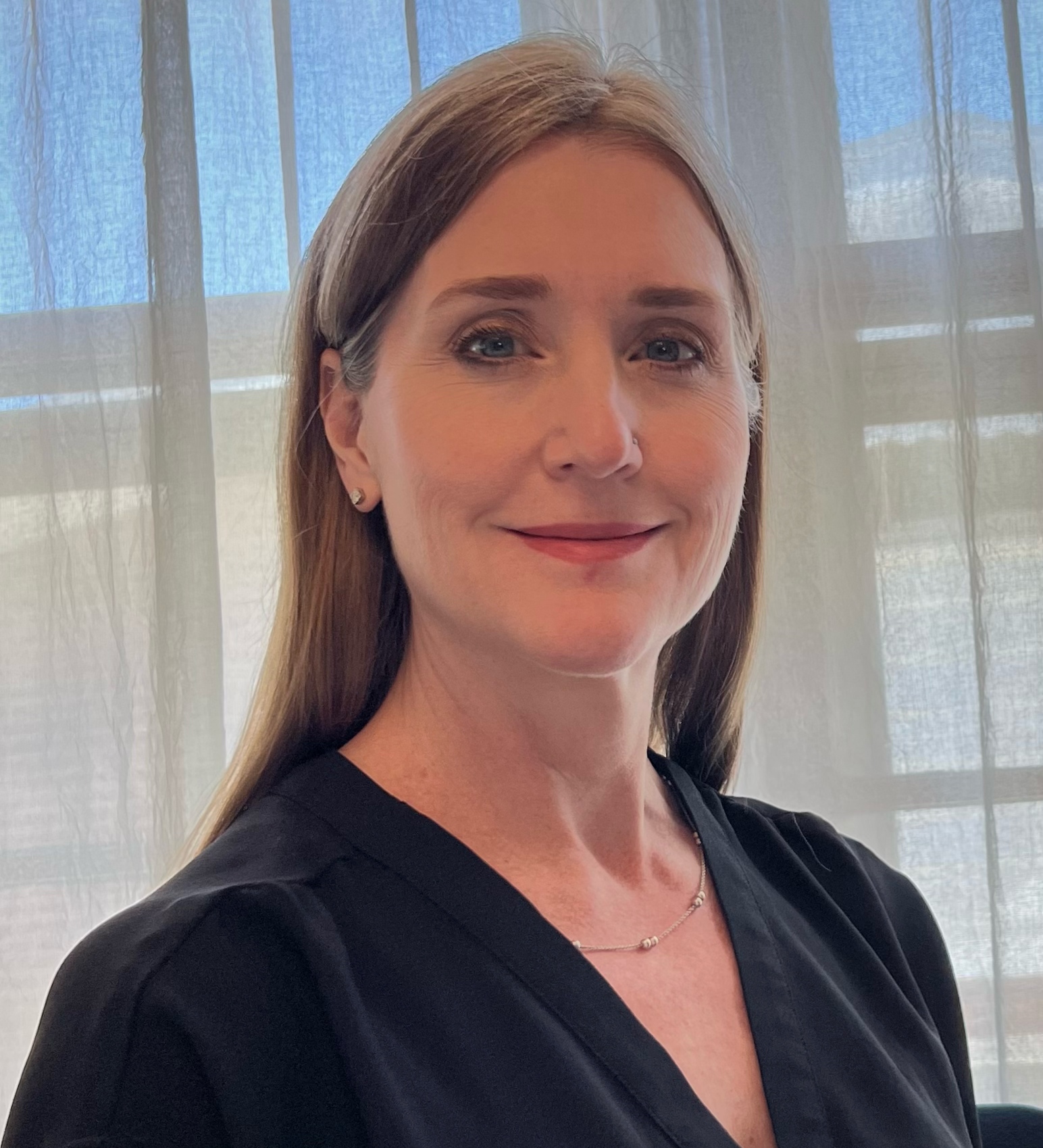
Natalie Kruse-Levy, MPH, is an acupuncture and herbal medicine student at National University of Health Sciences (NUHS) projected to graduate in August 2027. Prior to pursuing her education at NUHS, Kruse-Levy graduated from Tulane University with a master’s degree in public health. For 16 years, she worked internationally with the United States Agency for International Development (USAID) where she first managed the President’s Emergency Plan for AIDS Relief then later served as a Senior Health Advisor.
An International Path to Acupuncture and Herbal Medicine
While living overseas in Africa and Southeast Asia for the last 28 years, Kruse-Levy’s international work in public health exposed her to different cultural understandings of health and healing. During her time living in Thailand, she was fascinated with the way acupuncture was integrated into hospital care. While she’d always defined herself as someone with a deep interest in mindfulness, meditation and wellness, it wasn’t until she had a positive personal experience with an acupuncturist that ultimately led her to pursue a career in the field.
“I first had acupuncture from a doctor in the hospital to help with back strain related to pregnancy, and it completely helped me,” Kruse-Levy said. “After that, I would get acupuncture in different places through the years, mostly for musculoskeletal flare-ups. As I would get treatment, I would talk to the practitioners a lot about their experiences and the background of the medicine. As I was learning more, I liked that it really brought together many aspects of my health into one.”
As she continued learning more about acupuncture and herbal medicine (AHM), she found herself drawn to its whole person approach. She appreciated how AHM considers emotional and psycho-emotional factors, while also recognizing the role that family and community can play in a person’s overall health.
This philosophy resonated with her own experience working internationally, where she saw firsthand how culture can shape not only a person’s health challenges, but also the support systems and treatment approaches surrounding them. With much of her background rooted in public and behavioral health, Kruse-Levy felt that this more interconnected view of wellness felt meaningfully different from the Western medical model she had encountered in different parts of the world.
Choosing NUHS for an Integrative Education
When changes in her professional path prompted an earlier-than-expected transition, Kruse-Levy moved forward with plans to study at NUHS. The university appealed to her for a number of reasons, including the duration and structure of the program, her positive interactions with admissions and factors such as cost and location. Among those reasons, she found particular value in the opportunity to study in a setting that emphasizes collaboration across disciplines.
“Having worked in public health, I was really interested in the whole integrative medicine approach, and it appealed to me that there are these other programs offered as well and that there would be that cross fertilization that would be happening actually on campus.”
The highlight of the program for her thus far has been working in the clinic and working one-on-one with patients. While it isn’t something she’s used to with her background in public health, she thoroughly values giving her patients the time and help they need to heal.
“In public health, everything that you do is very evidence based, and it relies on a lot of data and statistics, but it’s all population level,” Kruse-Levy said. “It’s not the same as really getting to know a patient. I love hearing about people, their experiences, their life stories and how that all manifests in the pain that they’re experiencing.”
Why Integrative Care Matters
Kruse-Levy believes strongly in the importance of integrating Eastern and Western medicine rather than treating them as opposites. She sees the most effective care is one that recognizes the strengths of both systems. While Western medicine plays a critical role in surgery, acute care and other necessary interventions, she notes that AHM is especially valuable for addressing stress, pain, emotional health and overall wellbeing.
This outlook has shaped her classroom experiences as she identified Dr. Yihyun Kwon as a particularly impactful professor because of his ability to connect Western medical knowledge directly to acupuncture practice.
“Integration is really important because we live in a complex world and we have complex illnesses. The more we can integrate, the more we can help patients,” Kruse-Levy said. “So much of how we experience pain, wellness and our ability to heal is connected to our psycho emotional states, and also our background and our lived experiences. There’s a huge opportunity to work with people just on their foundational well-being that will facilitate healing and wellness, and I love that those are all connected together under AHM.”
Outside of the classroom, Kruse-Levy is involved in NUHS’ AHM club and remains active in community service, including volunteering in hospice and at the Downers Grove food pantry with her youngest son. As a single mother of three, she brings a distinctive perspective to her studies that are informed by service, life experience and a deep commitment to wellness.
For prospective students considering the field, Kruse-Levy stresses the importance of entering the field with both purpose and preparation. She encourages students to research acupuncture and herbal medicine carefully, understand the financial commitment involved and make sure they have a clear plan for how the profession fits into their future. For her, pursuing AHM is not a casual decision, but a meaningful commitment that requires both passion and practicality.