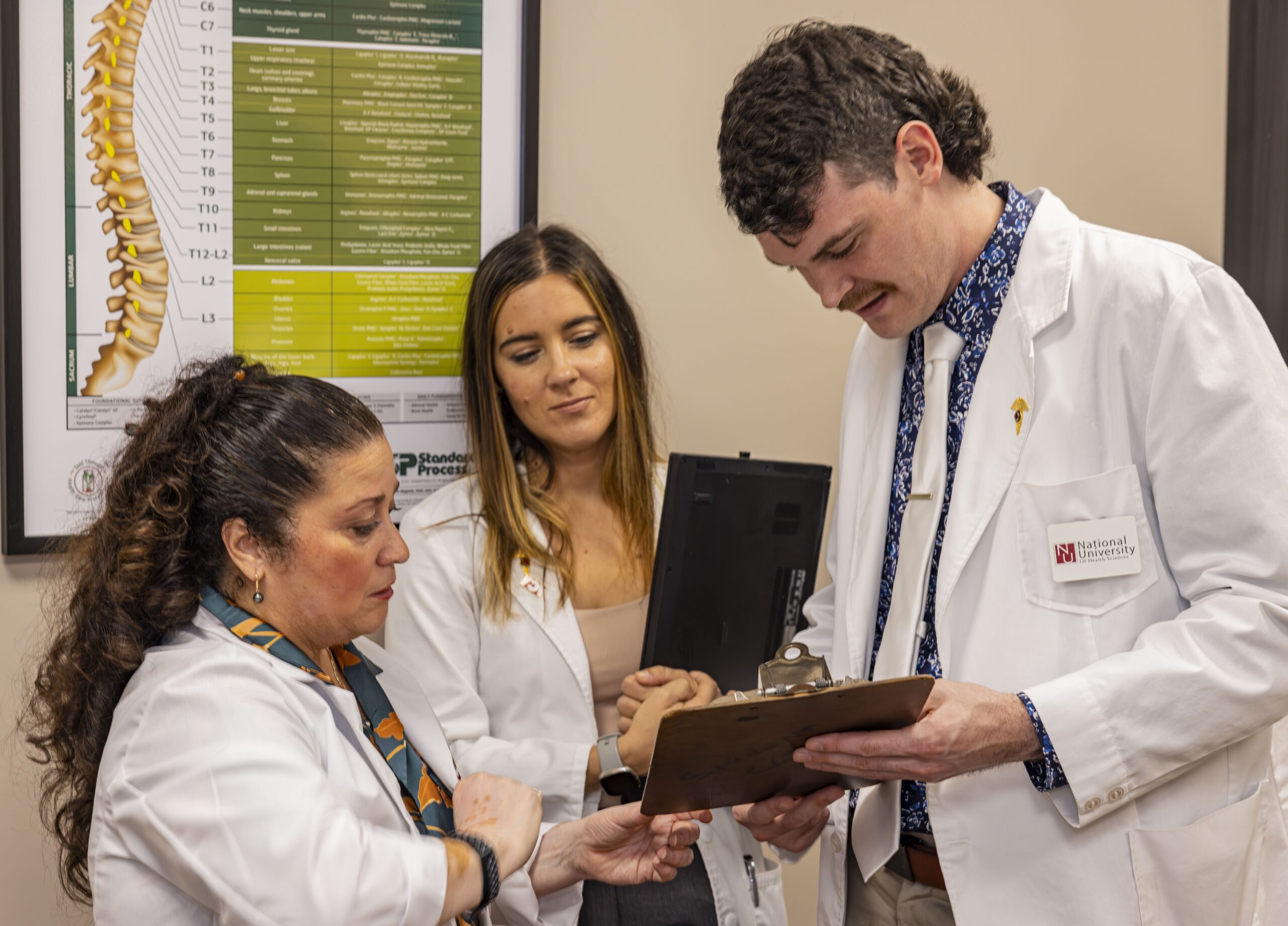
One of the most underrated skills you’ll develop during clinical rotations is figuring out your own patient flow. It’s easy to watch your clinicians, or a classmate who seems naturally organized, and think you have to copy their exact system. But as time goes on, your flow will look different, and that’s a good thing!
In my opinion, one big component to patient flow is personality. Are you someone who likes to review the chart and formulate a plan before you even walk into the room? Or do you prefer connecting with the patient first and then piecing the information together afterwards? There is nothing wrong with either one! It is all about which feels less stressful and produces the best interaction for you and your patient. As I begin my Advanced Clinical Diagnosis class, these interactions with simulated patients help me discover how I like to prepare for each case that comes my way.
Tools for Success
If you’re a planner like me, using a checklist, a template, or even a mental outline to guide your encounter can be super helpful. Over time, you’ll discover where you tend to get hung up– maybe it’s in the history, maybe in the assessment, maybe in explaining the plan. Those are your clues about where to refine your process. And practice makes perfect!
Last, it is important to remind yourself that every student feels a bit clunky at first. Patient flow is less about moving fast and more about moving with purpose. What works for one case may not work for another, and as we gain confidence, we’ll naturally get quicker and smoother. Repetition builds muscle memory and confidence, and soon our steps will feel like second nature.
Finding Your Style
Finding your personal patient flow isn’t about perfection. It’s about creating a system that lets you show up as the best and most confident version of yourself for each patient. With curiosity, practice and reflection, your personal patient flow will emerge, and it will ebb and flow as you do!
Learn more about NUHS Doctor of Chiropractic Medicine program.