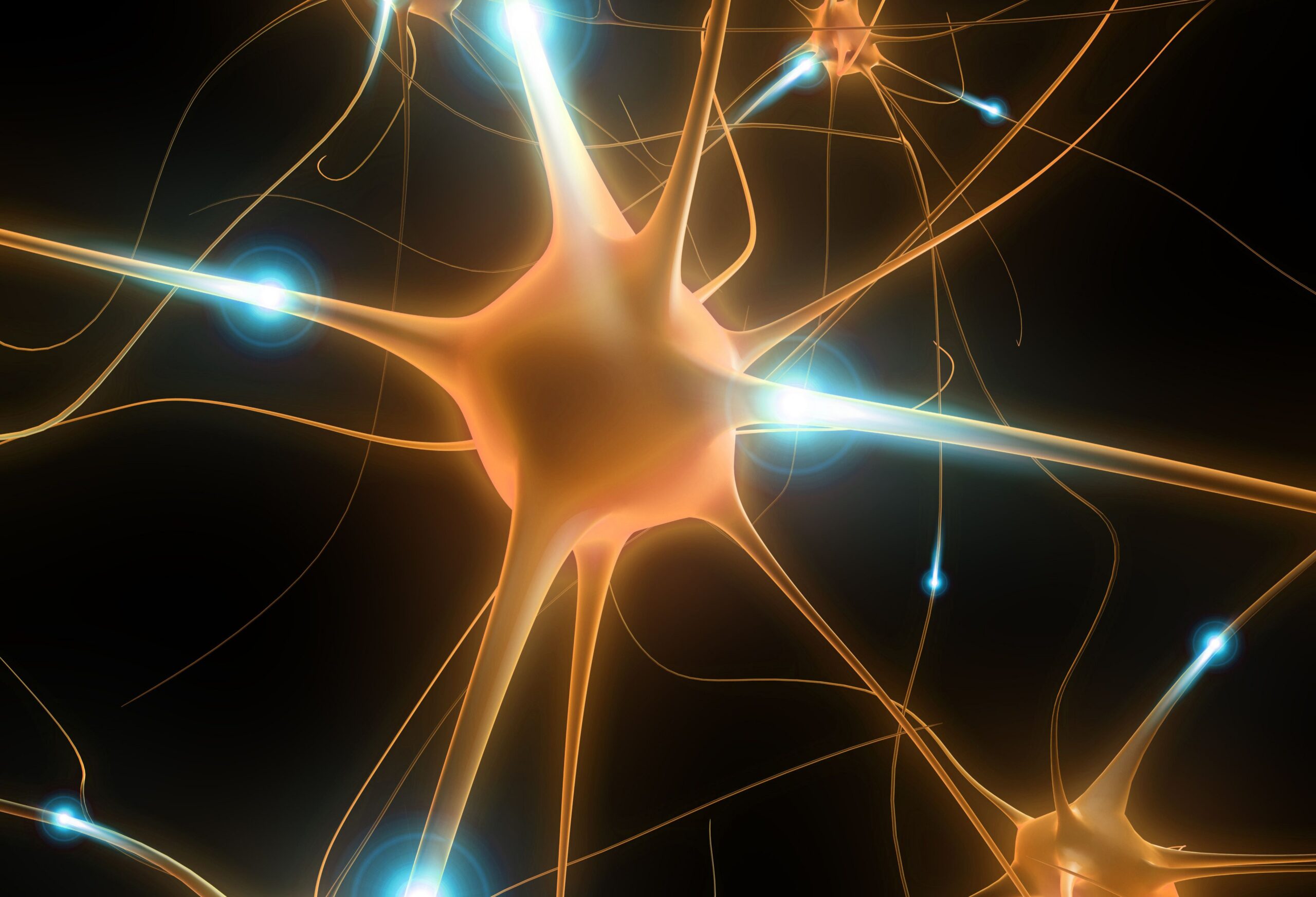
We often treat our thoughts like a private radio station that only we can hear, but your brain is an active participant in every word you speak internally. Whether you are cheering yourself on or spiraling into self-criticism, your neurology is physically shifting in response to the words you use to think about yourself.
The Prefrontal Cortex: Nature’s Pathways.
When you engage in negative self-talk, your brain treats the internal, “I’m not good enough,” as a real-world threat. This activates the amygdala, which is the brain’s alarm system, and it triggers a cascade of cortisol and adrenaline. Constant negative loops can eventually weaken the prefrontal cortex (PFC), the area responsible for logic and decision-making, effectively making it harder to think your way out of a bad mood. The neural pathways for rational thought become less active while the “survival” pathways become hyper-responsive. It effectively thins the grey matter density in the PFC over time, making it harder to regulate emotions or think your way out of a bad mood.
Neuroplasticity is the Driver.
On the other hand, positive self-talk is not just “wishful thinking”. It is a functional neurochemical practice. Reframing a challenge as an opportunity stimulates the release of dopamine and serotonin. These neurotransmitters improve your mood, enhance cognitive flexibility, and allow you to see solutions that a stressed brain would otherwise miss. This process is driven by neuroplasticity, the brain’s ability to reorganize itself by forming new neural connections. The brain follows the principle that “neurons that fire together, wire together.” Every time you consciously replace a self-defeating thought with a constructive one, you are physically strengthening a new neural pathway.
Over time, these pathways become more automatic based on their frequency of use. By consistently choosing kinder, more objective language, you are sculpting a brain that is more resilient to stress and more primed for success. Your brain is a supercomputer that follows your scripts, so if you would not say it to a friend, do not say it to yourself. By shifting your internal dialogue, you are not just changing your mindset, you are also changing your neurology.