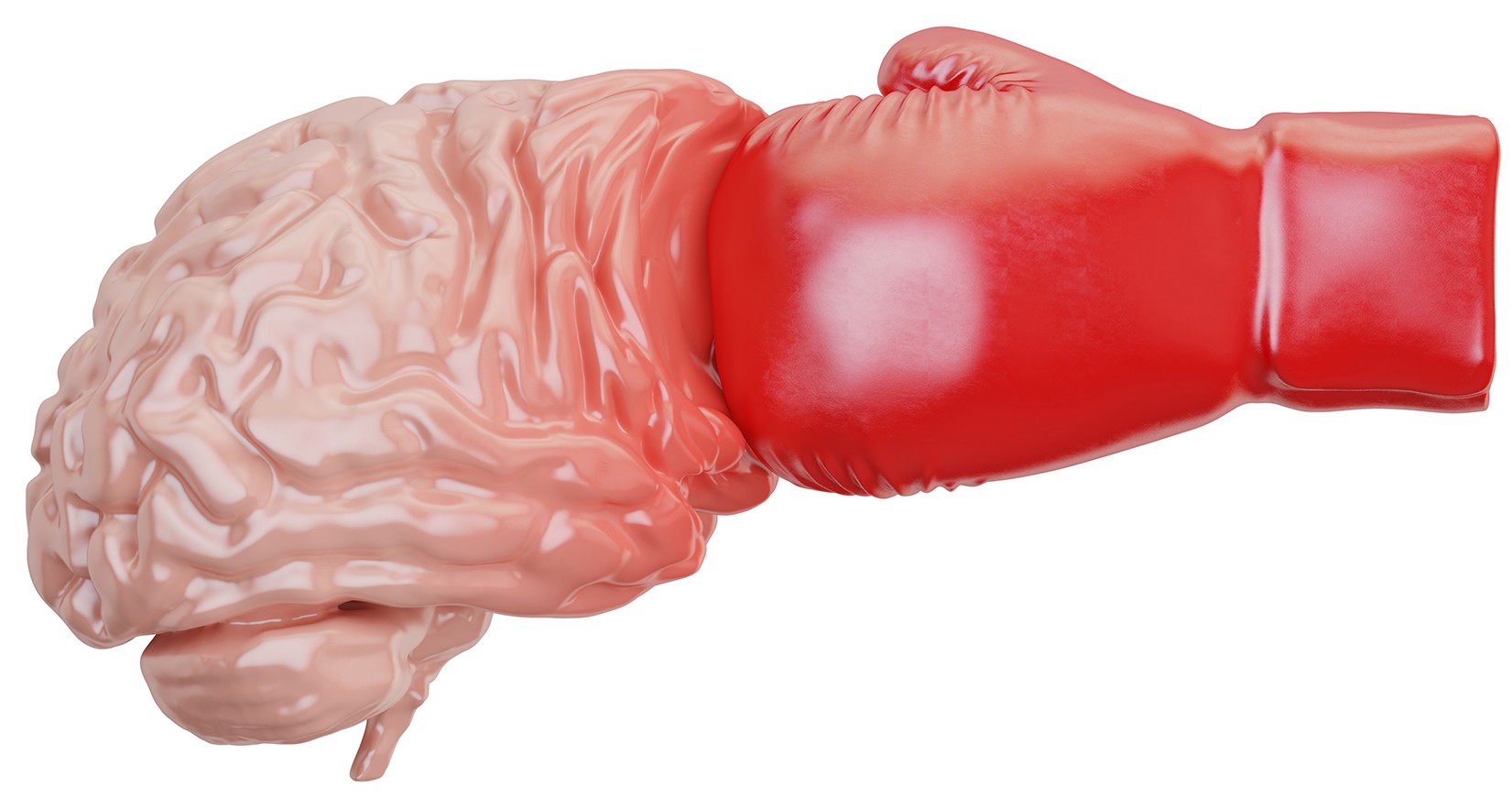
In the last two decades, there has been growing concern around one’s brain health after an individual suffers physical trauma/force to their head. The Centers for Disease Control and Prevention (CDC) defines traumatic brain injury (TBI) as disruption in the normal function of the brain that can be caused by a bump, blow, or jolt to the head, or penetrating head injury. Given acupuncture’s capability of neuromodulation, which is the process of altering or regulating nerve activity, we as acupuncturists are naturally curious: Can acupuncture treatment reduce and/or alleviate the negative outcomes that patients experience after a TBI?
Systematic Review and Meta-Analysis
In 2019, the first systematic review and meta-analysis for acupuncture as a post-TBI recovery strategy was published. The review included 3,511 patients from 49 trials conducted in China. While the studies included in the review had limitations, as all studies do, the results indicated that acupuncture has significant effects on the recovery of consciousness once it has been lost.
2025 Randomized Controlled Trial
In 2025, a randomized control trial found that acupuncture improves MRI brain microstructure with post-concussion symptoms in mild TBI patients.
The Treatment
Two different acupuncture treatments were utilized to elicit these changes. If the patient was lying on their back (supine treatment), the acupuncture points DU20, LR3, LI4, and RN4 were selected. If the patient was lying on their stomach (prone treatment), the acupuncture points DU20, GB20, SP6, BL15, BL18, and BL23 were selected.
Post-Concussion Symptom Evaluation
Post-Concussion Symptoms were re-evaluated 6-12 months after the participants received their series of acupuncture treatments. The control group (no treatment) and the sham acupuncture group (needles placed into the body at random) experienced similar post-concussion symptom ratings, while the verum acupuncture group (needle placement according to Traditional Chinese Medicine) experienced decreased post-concussion symptom ratings.
The Imaging Technology
Diffusion tensor imaging (DTI), which is a magnetic resonance imaging (MRI) technique, was used to evaluate white matter microstructure in the living brain. It measures how water molecules move inside brain tissue. Because water moves more easily along nerve fibers than across them, DTI maps these pathways to show the health and organization of brain connections.
The Metrics
Fractional Anisotropy (FA): a number from zero to one that shows if water moves more in one direction or in all directions.
High FA: Shows healthy, strong, and well-organized white matter tracts
Low FA: Shows damage, loose fiber packing, or loss of myelin insulation.
Right posterior corona radiata: a back-section bundle of white matter nerve fibers in the right hemisphere the brain that carries signals between the cerebral cortex and lower brain structures like the thalamus, brainstem, and spinal cord.
Conclusion of the Study
The study concluded that verum acupuncture increased fractional anisotropy in the right posterior corona radiata relative to that observed in the sham acupuncture and control groups. These increases in fractional anisotropy correlated with better post-concussion symptom ratings at 6–12-month follow-up. The sham acupuncture and waiting-list control groups had no fractional anisotropy changes.
Conclusion
Given that 25% of adults are estimated to experience a mTBI at some point in their life, this research is incredibly useful for clinical practice. For a deeper dive into the studies mentioned visit the links below!
Resources:
Systematic Review: https://onlinelibrary.wiley.com/doi/10.1155/2019/5190515
Randomized Controlled Trial: https://pubs.rsna.org/doi/10.1148/radiol.250315#supplementary-materials