Apply! Apply! Apply! Professors and alumni always encourage students to pursue scholarships, but how do you standout? Why should the committee choose you over another applicant? I recently wrestled with these questions while applying for a scholarship that required an essay on the “application of chiropractic care in sports medicine.”
During my research, I found numerous studies proving the relationship between correct spinal alignment with increased strength and response time. While these studies speak for themselves, I realized that most applicants would take this exact same clinical approach. I wanted to standout, so I decided to be different. Below, I am sharing the essay I submitted. In a few weeks, I will update you to let you know if my alternative approach paid off!
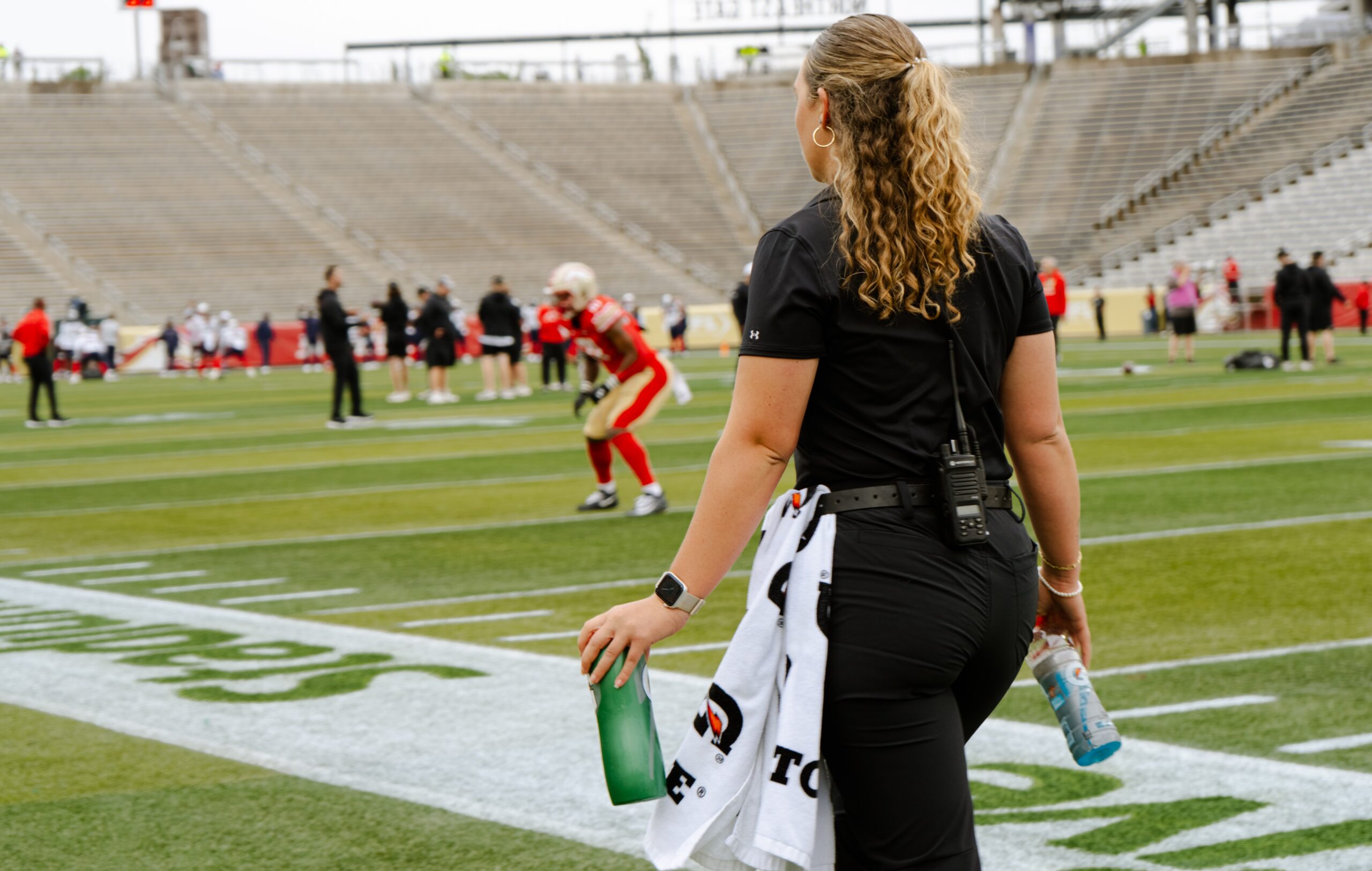
“For four years, my office was the sidelines of professional and collegiate football fields. As an athletic trainer, I lived and breathed the “25/8 grind,” managing the care of athletes subjected to high-velocity trauma on a Saturday night and expected to perform at the same elite level again just six days later.
Unique Environment
In this environment, athletic trainers excel at balancing minimally invasive interventions that elicit a healing response with the management of the resulting inflammatory process. We constantly teeter on the edge of doing just enough but not too much, all to ensure these athletes are on their A-game come the following weekend. Still, I frequently hit the glass ceiling of what our care could offer.
These are athletes at the highest level of their sport, people who are in tune with their bodies almost to a fault. But who wouldn’t be when physical health is how you put food on the table? Although I primarily provided care for injured athletes, I also worked with the healthy players who were structurally sound but felt functionally inhibited. There was seemingly nothing “wrong” with them, yet they would express deep frustration when noticing their physical reaction times lagged. Within my scope of practice, I did what I could with the tools in my toolbox: utilizing manual therapy to break down tissue and designing rehabilitation programs to “reteach” those fibers how to function.
The Chiropractic Point-of-View
It wasn’t until I was speaking with a chiropractor about my frustrations regarding one of these athletes that he asked, “Have you checked their joint position?” I explained that the range of motion was good and there was no generalized pain with movement. By the end of the conversation, I asked if he would be willing to look at the athlete, and the following day he did just that. During his assessment, he discovered that the fibular head had shifted anteriorly, and he corrected this by utilizing a subtle adjustment to realign the joint. I continued with our standard treatment and rehabilitation. After practice that afternoon, the athlete turned to me and said, “That’s the best I’ve felt on the field in a while.”
That sentence right there is what every Athletic Trainer lives for.”