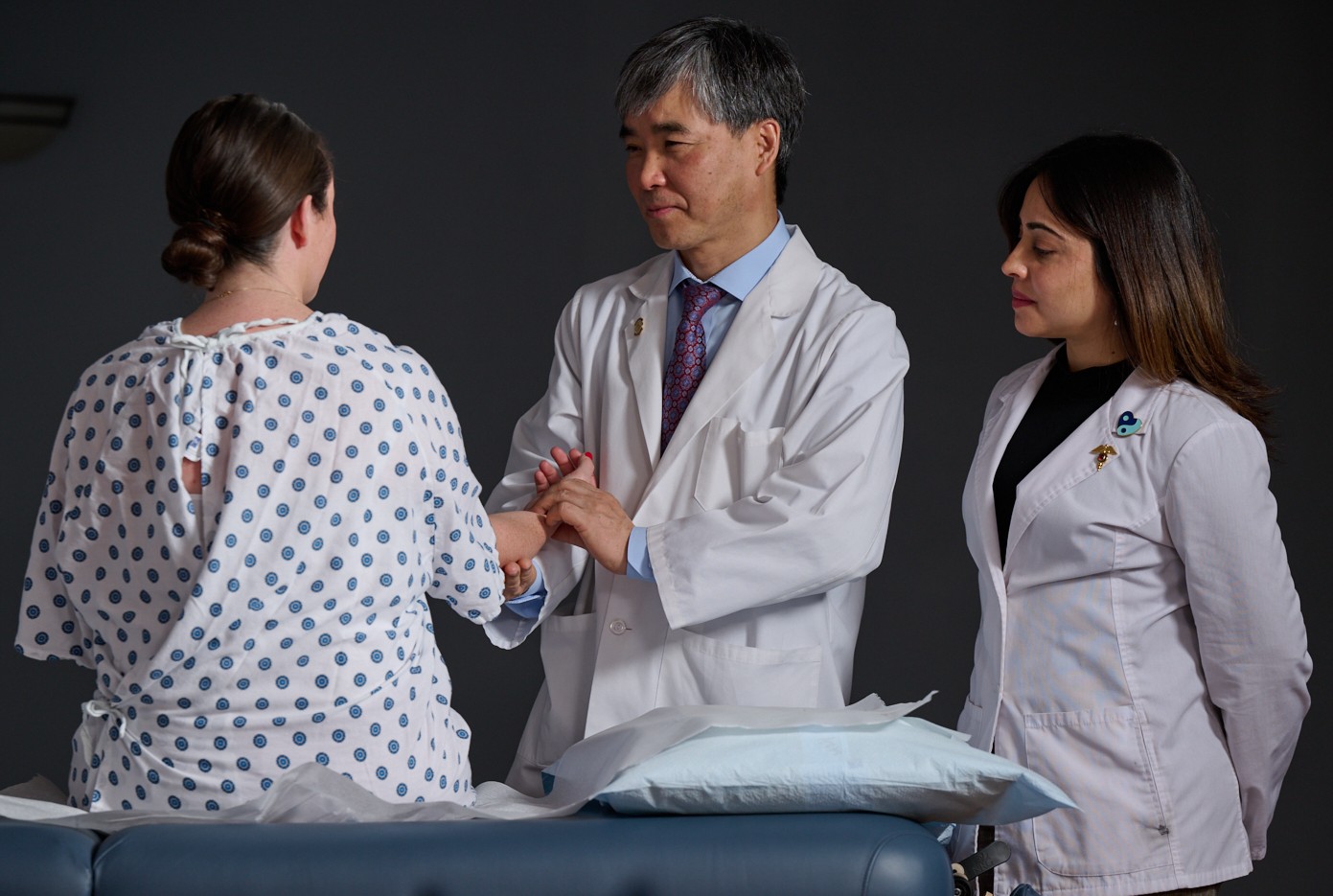
In recent years, acupuncture has become increasingly well-accepted within the medical community. Many hospitals, clinics and health care providers offer acupuncture as a complementary or alternative treatment option alongside conventional medical treatments. This is due to a growing body of scientific research on acupuncture’s effectiveness. Many studies have shown positive outcomes for pain management, stress reduction, nausea and other conditions.
As acupuncturists make their way into more mainstream medical environments like hospitals and fertility clinics, a more advanced, doctoral level of training in acupuncture is quickly becoming necessary. National University of Health Sciences (NUHS) offers a Doctor of Acupuncture (DAc) program, as well as a Doctor of Acupuncture Completion (DAc-C) program for individuals who already hold a master’s degree in Acupuncture or Oriental Medicine.
While some jurisdictions allow acupuncturists to practice with a master’s level of training, there are several advantages to gaining a doctoral degree in the field, no matter where you reside. Here are six reasons why you might want to consider obtaining a more advanced level of training in the field of acupuncture.
1) You will have the advanced diagnostic skills needed in an integrative setting.
Doctoral-level training typically offers more extensive education in Traditional Chinese Medicine (TCM) diagnostics, including pulse reading and tongue diagnosis, along with Western diagnostic methods. You will be exposed to coursework in physiology, neurology and pathology. While few schools even offer anatomy education through full cadaver dissection in a gross anatomy lab, NUHS does. This deeper understanding can lead to more accurate diagnoses.
This skill is particularly important when working in an integrated setting. Advanced diagnosis skills will help you understand when it is appropriate to refer patients to other specialties. Even in private practice, it is important to build relationships with other practitioners in your area, who can in turn refer patients to you.
In a medical or integrated setting, many of your colleagues may have a doctoral level of training. It is important that you can speak the same language. This goes far beyond just understanding medical terminology. Having a doctorate means you will be able to better discuss all aspects of your patient’s case. This includes diagnosis, treatment options along with care they have already received.
2) You may have an expanded scope of practice.
Education level can directly influence the scope of practice acupuncturists are able to perform, particularly within a hospital setting. Acupuncturists performing basic treatments may not require doctoral-level training, while those involved in complex cases, research and interdisciplinary collaboration are more likely to have an advanced education.
If you are interested in working on more complex cases or a larger variety of cases as an acupuncturist, you may want to consider obtaining a doctorate in acupuncture. Doctoral-level programs typically provide more in-depth and advanced training in acupuncture techniques, diagnosis and treatment strategies. This higher level of expertise can enhance your ability to effectively address complex cases and offer more specialized treatments.
3) You will have a higher level of professional recognition within the medical community and among your patients.
To many, a doctoral degree demonstrates that you have met certain standards of education, training and ethics. As a result, a doctorate will provide you with increased recognition within the health care community and among patients. It can also convey a higher level of commitment to the field.
When patients seek acupuncture treatments, they want assurance that they are receiving care from a qualified and competent practitioner. When you have a doctoral level of training, patients may be more confident that you have the necessary skills to provide safe and effective treatments, reducing the risk of harm.
Increased recognition within the field is likely to attract more patients and potentially lead to higher income opportunities. Pursuing a doctorate in acupuncture might also provide acupuncturists with opportunities for career advancement, specialization and leadership roles within hospitals or other integrated environments.
4) Hospitals may prefer a doctoral level of training.
If you plan on practicing in a hospital, a doctorate can help you “get your foot in the door” professionally. Some of America’s top hospitals offer acupuncture treatments, including the Mayo Clinic, the University of California San Francisco Medical Center, Memorial Sloan Kettering Cancer Center, Duke University Medical Center and Yale New Haven Hospital. These hospitals may prefer acupuncturists with advanced training to ensure an elevated level of expertise. Acupuncturists with a doctoral level of training can also help establish the credibility of acupuncture as a complementary therapy within a medical setting.
The qualifications for acupuncturists to work in hospitals varies. One day, a hospital’s preference for advanced degrees may become a requirement.
5) More jurisdictions may require a doctoral level of training in the near future.
The educational requirements to legally practice acupuncture vary widely in the United States. Some states already require a higher level of training as a licensed doctor of acupuncture or physician to practice, such as Arkansas, Florida, Nevada, New Mexico and Rhode Island.
As the acupuncture profession evolves and becomes more commonplace within medical settings, a doctorate might become required for licensure in certain jurisdictions.
Since a doctoral degree is the highest level of training you can achieve within the acupuncture field, you will not need to worry about obtaining additional education; you will be able to practice in a wider range of jurisdictions.
6) You may be able to add to acupuncture’s growing body of research.
Obtaining a Doctor of Acupuncture degree can expand opportunities for you to get involved with research in the field. Doctoral programs often include coursework in research methodology, helping practitioners critically evaluate acupuncture research and apply evidence-based practices in their clinical work. This emphasis on research can lead to better patient outcomes and help contribute to the overall credibility of acupuncture as a medical modality and to your practice.
Research involvement can range from conducting clinical studies to contributing to the growing body of knowledge on acupuncture’s effectiveness and mechanisms of action. In your private acupuncture practice, you can conduct case studies or small research projects to evaluate the effectiveness of specific treatment approaches for your patients. While these might not be large-scale studies, they can still contribute valuable insights.
A doctorate is the highest degree you can attain in the promising field of acupuncture. As more practitioners attain this advanced level of education, it is likely to benefit the field overall.
Professional recognition not only helps individual practitioners but also contributes to the overall growth, credibility and integration of acupuncture within the broader health care landscape. It fosters patient safety, quality care, collaboration and the advancement of acupuncture as a respected health care modality.
If you are interested in becoming a Doctor of Acupuncture, it is essential to carefully research and consider the specific doctorate programs available in your region, as program quality can vary widely. Just be sure to evaluate the curriculum, faculty qualifications, clinical opportunities and the program’s reputation within the acupuncture community before deciding about pursuing a particular institution.
If you are beginning your first-professional education journey, take the next step toward becoming a Doctor of Acupuncture at NUHS. If you already have a master’s degree in acupuncture or Oriental Medicine, our Doctor of Acupuncture Completion Program (DAc-C) is perfect for you! The DAc-C program can be completed in as few as three trimesters or one year of study and is completely online, so you can finish each term from the comfort of your own home.