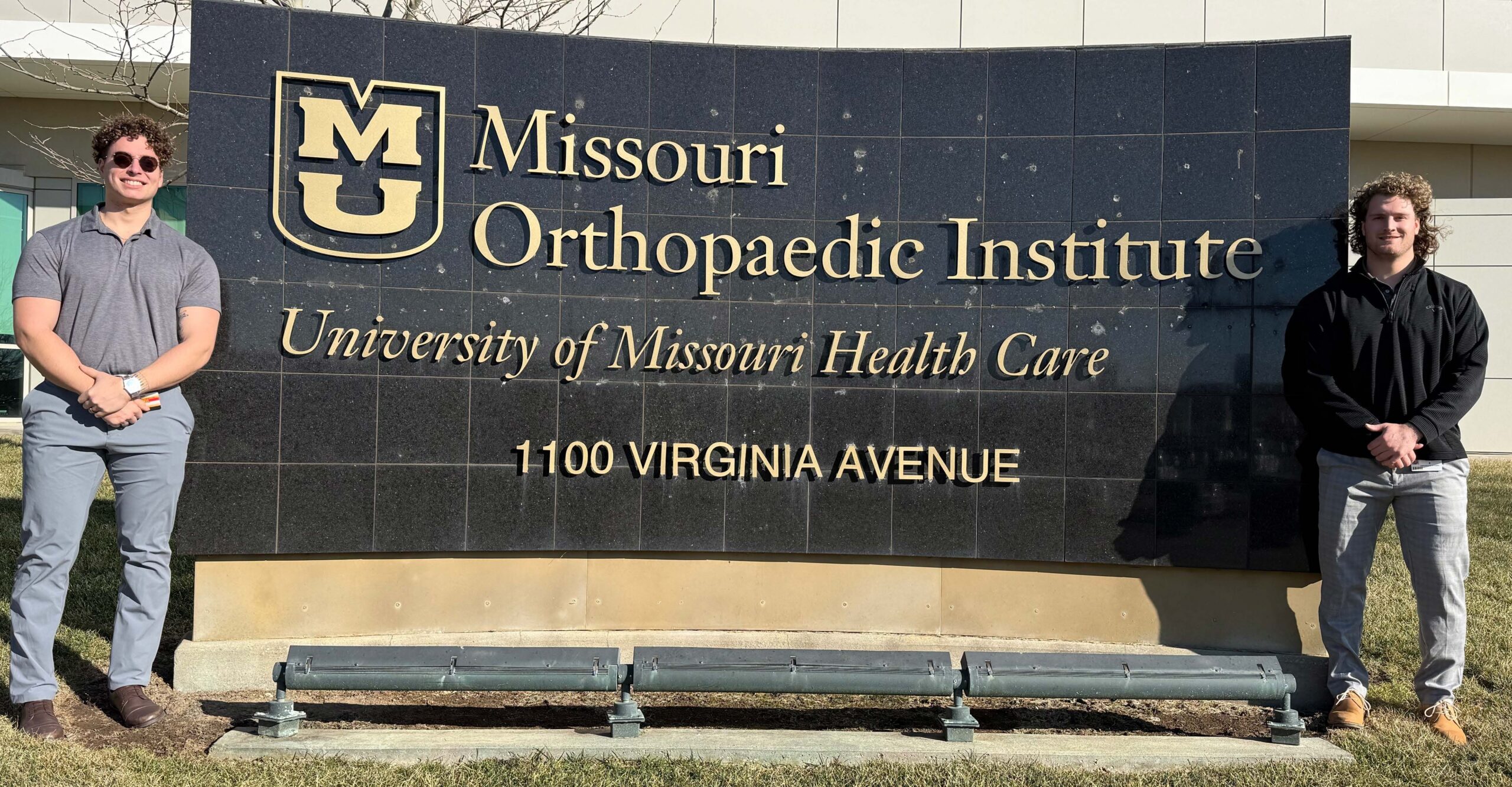
One of the benefits I continually highlight regarding my clerkship at Missouri Orthopaedic Institute (MOI) is the diversity of patients we encounter, both in terms of clinical presentation and diagnosis. This exposure has provided invaluable learning opportunities, allowing us to move beyond textbook knowledge and apply our examination skills in real-world situations. Recently, Dr. Miller gave Jacob and me the opportunity to complete our full examination sequence on a patient with cerebral palsy. For readers who may be unfamiliar with the condition, I’ve linked the Mayo Clinic’s overview. In simple terms, cerebral palsy refers to a group of neurological conditions that affect muscle tone, movement and posture.
Cerebral palsy exists along a spectrum, meaning the severity and presentation can vary widely from one individual to another. While the condition is not curable, it is also non-progressive, meaning it does not worsen over time due to the underlying brain injury itself. Many individuals with cerebral palsy are able to live long, fulfilling lives, often with the help of therapy, assistive devices and lifestyle modifications. Our patient, for example, reports experiencing meaningful relief and improved function through consistent chiropractic care, which he has incorporated into his overall health routine.
The Clinical Perspective
From a clinical perspective, several of the patient’s symptoms have been particularly notable. He demonstrates spasticity with hyperreflexia, essentially tight, stiff muscles accompanied by exaggerated reflex responses. When testing these reflexes, clonus is often present, which appears as a rhythmic, pulsating contraction following the reflex stimulus. Clonus is a series of involuntary, rhythmic, muscular contractions and relaxations, usually triggered by sudden, sustained stretching of a muscle. It is a sign of nervous system damage. Observing these neurological findings firsthand has been an important reminder of how dramatically neuromuscular conditions can influence movement patterns and reflex activity.
The patient also presents with an altered gait pattern and ataxia, meaning he experiences difficulty with balance and coordination. Watching how these challenges manifest during movement has provided a valuable opportunity to think critically about functional mobility and how different neurological conditions impact everyday activities such as walking or maintaining stability. Perhaps the most interesting finding to me personally is his ability to demonstrate a positive Hoffman’s test, an orthopedic and neurological maneuver used to screen for upper motor neuron involvement. Seeing this response in a clinical setting reinforces concepts that are often discussed in lectures but rarely observed so clearly in practice.
The Importance of Patient-Physician Collaboration
Beyond the neurological findings themselves, what has made this experience particularly meaningful is the patient’s willingness to work with us. He has been incredibly generous with his time, allowing Jacob and me multiple opportunities to modify our examination procedures so they better fit his physical needs and limitations. This type of collaboration is invaluable for students learning to transition from theoretical knowledge to patient-centered care.
Experiences like this highlight an important lesson in clinical practice. It is easy to become comfortable using the same adjustments, positions, and examination routines with most patients. However, not every patient will fit neatly into those routines. Conditions such as cerebral palsy remind us that flexibility and creativity are essential skills for clinicians. Being able to adapt examinations, modify treatment positions and approach care from multiple angles ensures that we can provide effective care for a wide variety of patients.